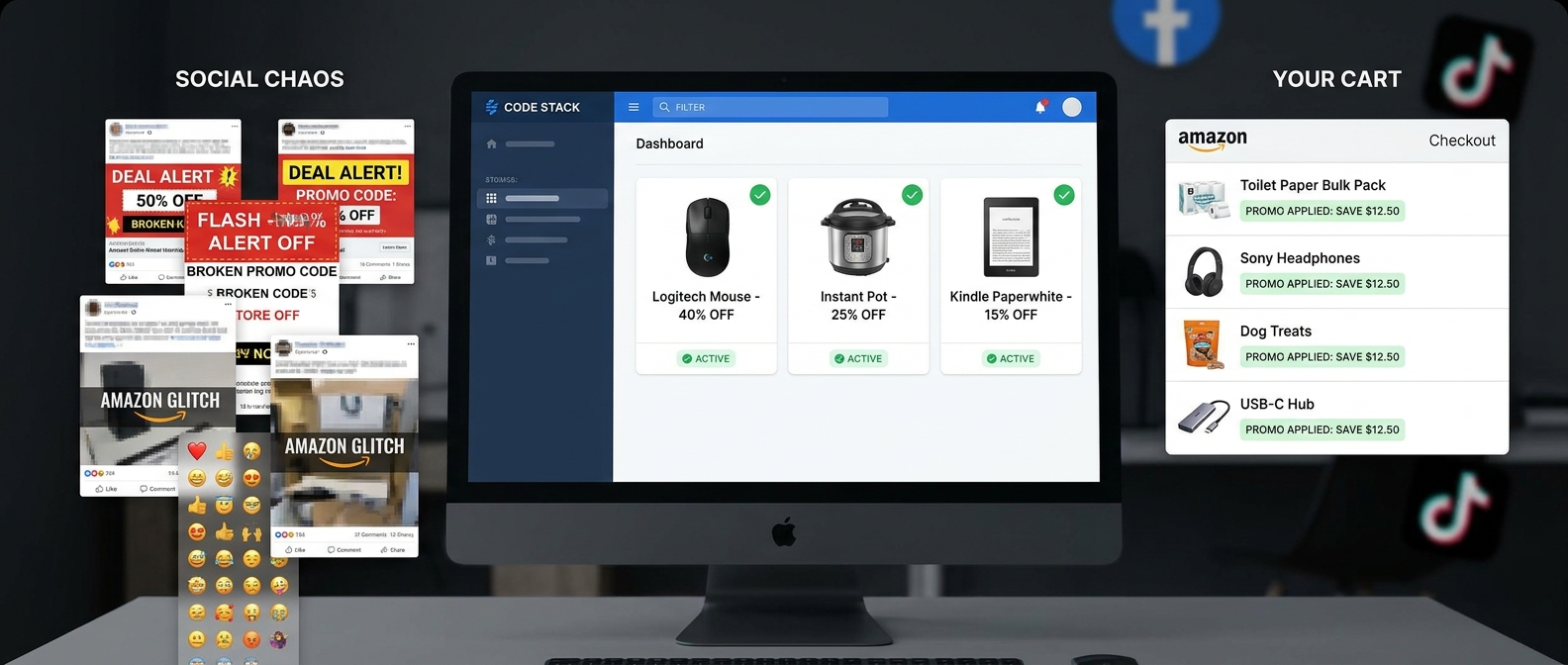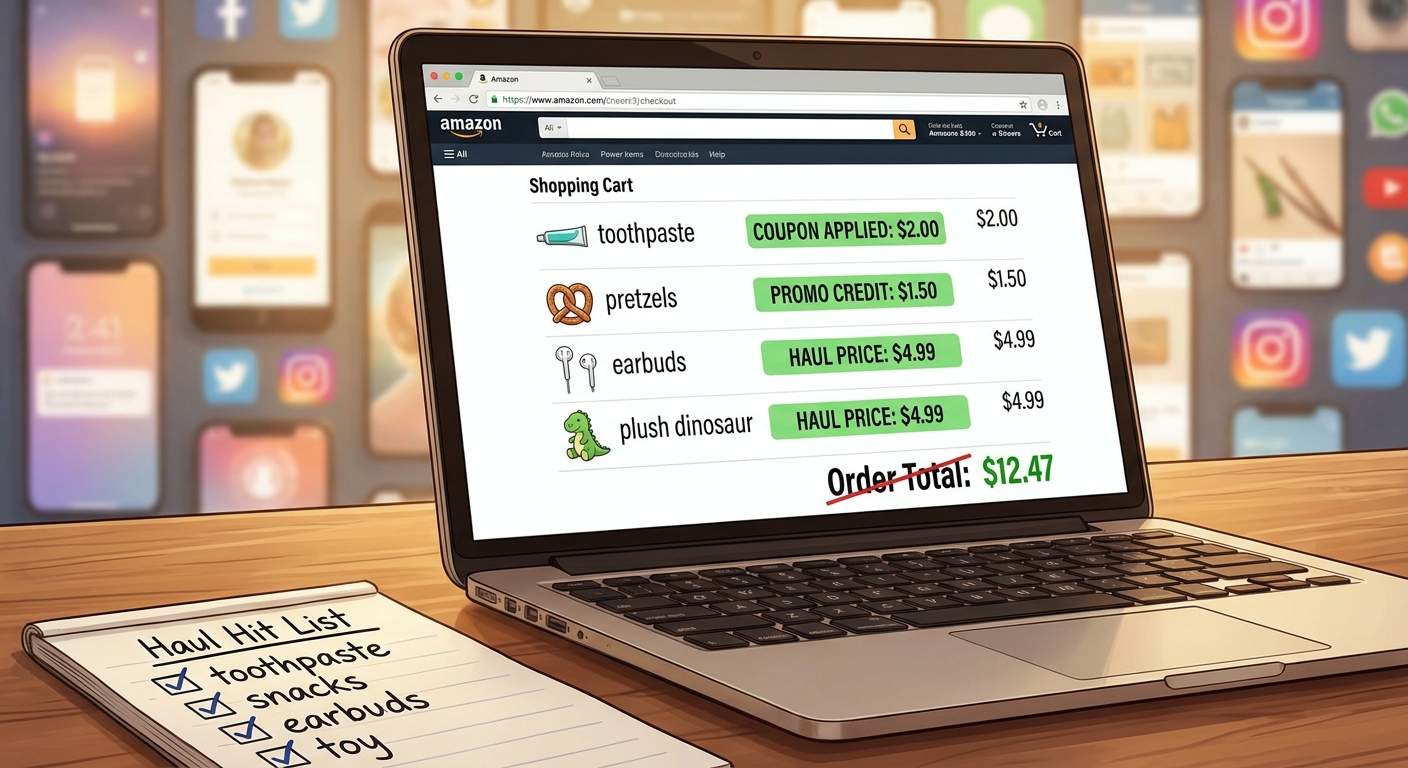
If Amazon’s deal pages make you feel like you are digging through a yard sale blindfolded, you are not imagining it. One minute you see a charger for 89 cents, the next minute it is gone, the coupon disappears, and the “deal” was never real for your account anyway. That is the problem with the new wave of amazon haul hidden coupon glitch deals. The discounts can be real, but they are scattered across Haul-style low-price events, clipped coupons, invite-only looking promo drops, and plain old pricing mistakes that vanish in minutes. Most shoppers either give up or waste money on stuff they did not need. The smarter move is to treat these events like a system, not a treasure hunt. Build a short shopping list first, check for stackable coupons second, and only then jump on a price-error alert. That is how you turn random cheap listings into checkouts that are actually 50 to 70 percent lower than normal.
⚡ In a Hurry? Key Takeaways
- The real trick is not one magic code. It is combining Haul pricing, clipped coupons, and fast price-drop alerts on items you already planned to buy.
- Start with a “Haul Hit List” of 10 to 20 products, then check seller coupons and cart totals before you check out.
- Ignore fake markdowns and screenshot hype. Only trust deals with a clear before-and-after cart price and a return option you are comfortable with.
What people mean by the “Hidden Haul Code” hack
Let’s clear this up first. There usually is not one secret code floating around the internet that unlocks everything. What shoppers call the “Hidden Haul Code” is really a mix of three things.
- Ultra-low event pricing, often tied to Amazon’s budget-shopping experiments like Haul.
- Hidden or lightly promoted coupons that only appear on the product page or at checkout.
- Short-lived pricing errors or promo stacks that make the final cart total much lower than the listed price.
That is why one person posts a cart full of bargains while someone else clicks the same product ten minutes later and sees nothing special. These deals are often account-specific, region-specific, seller-limited, or simply expired.
Why so many shoppers miss the best deals
Amazon has made bargain hunting messier. The old public promo-code style pages are less useful than they used to be. Instead, shoppers are nudged toward broad “Today’s Deals” pages, while the best discounts now show up in smaller pockets.
Those pockets include:
- Coupon checkboxes on the product page
- Lightning-style price drops with limited quantities
- Budget-event sections like Haul
- Seller promotions such as “buy 2, save 20%”
- Private or semi-private alert channels on Discord, Telegram, WhatsApp, and social apps
The result is simple. Casual shoppers see clutter. Organized shoppers see patterns.
The “Haul Hit List” system that actually works
If you want to win with amazon haul hidden coupon glitch deals, stop browsing first and planning second. Do the opposite.
Step 1: Make a real shopping list
Write down 10 to 20 items you actually need over the next month or two. Think boring but useful. Phone chargers. Storage bags. Pet supplies. Vitamins. Kitchen tools. Socks. Power strips. Small electronics. Baby items.
This matters because the best deal is still a bad deal if it was never on your list.
Step 2: Know the normal price
You need a rough idea of what each item usually costs. Not down to the penny. Just enough to tell the difference between a real bargain and a fake markdown. If a $19.99 item “drops” to $14.99 with a big red badge, that may be nothing special. If the same item falls to $6.49 after a clipped coupon, that is worth your attention.
Step 3: Search inside low-price event sections
When Amazon runs a budget-focused push like Haul, search your list there first. Do not just scroll the homepage. Use simple item keywords from your list and sort through the low-price pool with purpose.
Step 4: Check the product page for hidden savings
This is where many people lose money. They see the low headline price and rush. Slow down and check for:
- A coupon checkbox under the price
- A multi-buy discount
- A percentage off applied at checkout
- A seller promo hidden lower on the page
Sometimes the extra discount is only visible after you click into the listing. Sometimes it only shows after adding the item to your cart.
Step 5: Verify the final checkout total
The cart is the truth. Not the search result. Not the influencer screenshot. Not the crossed-out “list price.” If the discount does not survive to the cart or final checkout screen, move on.
How coupon stacking usually works
This is the part that creates those dramatic 60 to 70 percent savings screenshots. You are not always getting one giant discount. You are layering smaller ones.
A typical stack might look like this:
- Item is already discounted in a low-price event
- You clip a 20% off coupon
- The seller is also running “buy 2, save 10%”
- A price dip hits before checkout
That stack can turn a normal $15 item into something close to $5 to $7 total. Not every product qualifies, of course, but enough do that the method is worth learning.
How to spot fake discounts fast
This is the part that protects your wallet. Cheap-looking prices can still be junk deals.
Red flags to watch for
- The item has no meaningful review history and a brand name that looks random
- The “list price” seems inflated compared to similar products
- The screenshot only shows the item page, not the cart total
- The coupon vanishes when you sign in
- Shipping time is unusually long for an item claimed to be hot and limited
Green flags to trust more
- You can see the price before and after the coupon in your own cart
- The item is from a known category you buy often
- The seller has a decent track record
- The return window is clear
- The deal still makes sense even without hype
How to use alerts without becoming obsessed
You do not need to camp in chat groups all day. That is the myth. Set up a lightweight system instead.
A simple routine
- Keep your Haul Hit List in your phone notes app.
- Check Amazon once in the morning and once in the evening.
- Use one or two trusted deal-alert sources, not ten.
- Only act when the deal matches an item on your list.
That last step is what keeps bargain hunting from turning into impulse shopping with extra steps.
Best categories for these underpriced deals
Some product types show up in glitch-style promotions more often than others. You will usually have better luck with small, lightweight, highly competitive items.
- Charging cables and phone accessories
- Kitchen gadgets
- Cleaning tools
- Beauty accessories
- Pet basics
- Home organization items
- Low-cost toys and party supplies
Bigger-ticket items can get real discounts too, but the dramatic under-a-dollar and ultra-cheap stacks usually happen on small goods where sellers can move volume quickly.
What to do when a deal disappears in your cart
This happens all the time. It is annoying, but it does not always mean you did something wrong.
Try these steps:
- Refresh the page and re-check the coupon box
- Remove the item and add it again
- See if the discount requires a quantity of two or more
- Check whether the seller changed
- Confirm the item is still sold in your region
If it still does not work, let it go. Chasing a dead deal for 20 minutes usually costs more time than it saves money.
A smart rule for glitch deals
Assume any true pricing error can be canceled. That does not mean avoid them. It just means do not build your week around them.
If you catch an obvious price mistake, great. Place the order. Take a screenshot of the cart total. Then move on with your life. If it ships, fantastic. If Amazon or the seller cancels it, you have not lost anything except a minute or two.
Who benefits most from this method
This approach is best for shoppers who buy a lot of practical household items and want a repeatable process, not just viral bragging rights.
You will likely get the most value if you:
- Have a family shopping list
- Restock common supplies often
- Are patient enough to compare final prices
- Do not mind skipping deals that fail the cart test
At a Glance: Comparison
| Feature/Aspect | Details | Verdict |
|---|---|---|
| Haul event pricing | Very low starting prices, usually best on small everyday items | Worth checking first, but only with a list |
| Hidden coupons and seller promos | Extra savings may only appear on the product page or at checkout | Best source of real stacking discounts |
| Glitch and error-price alerts | Can produce huge savings, but deals vanish fast and may be canceled | Useful as a bonus, not a shopping plan |
Conclusion
Amazon bargain hunting has changed. The old way of typing in random promo codes and hoping for magic is fading out. The new way is narrower, faster, and honestly a bit sneaky. That is exactly why a simple system matters. If you plug your real shopping list into a Haul Hit List, then mix that with hidden coupon checks and price-error alerts, you give yourself a practical shot at the best savings without living on TikTok or trusting every “run, don’t walk” post you see. More important, you protect yourself from fake discounts because you are judging deals by verified cart totals, real coupon stacks, and screenshots that show the before and after. That makes this useful for the community right now. The best deals are moving into smaller channels and disappearing in minutes, but everyday shoppers can still keep up. You do not need insider access. You just need a repeatable method and the patience to let the cart tell the truth.